Heard a bang from the garage? That was the spring.
A snapped spring is the single most common garage door failure — and the most dangerous to touch yourself. We replace torsion and extension springs same day, balance the door, and safety-test it before we go.
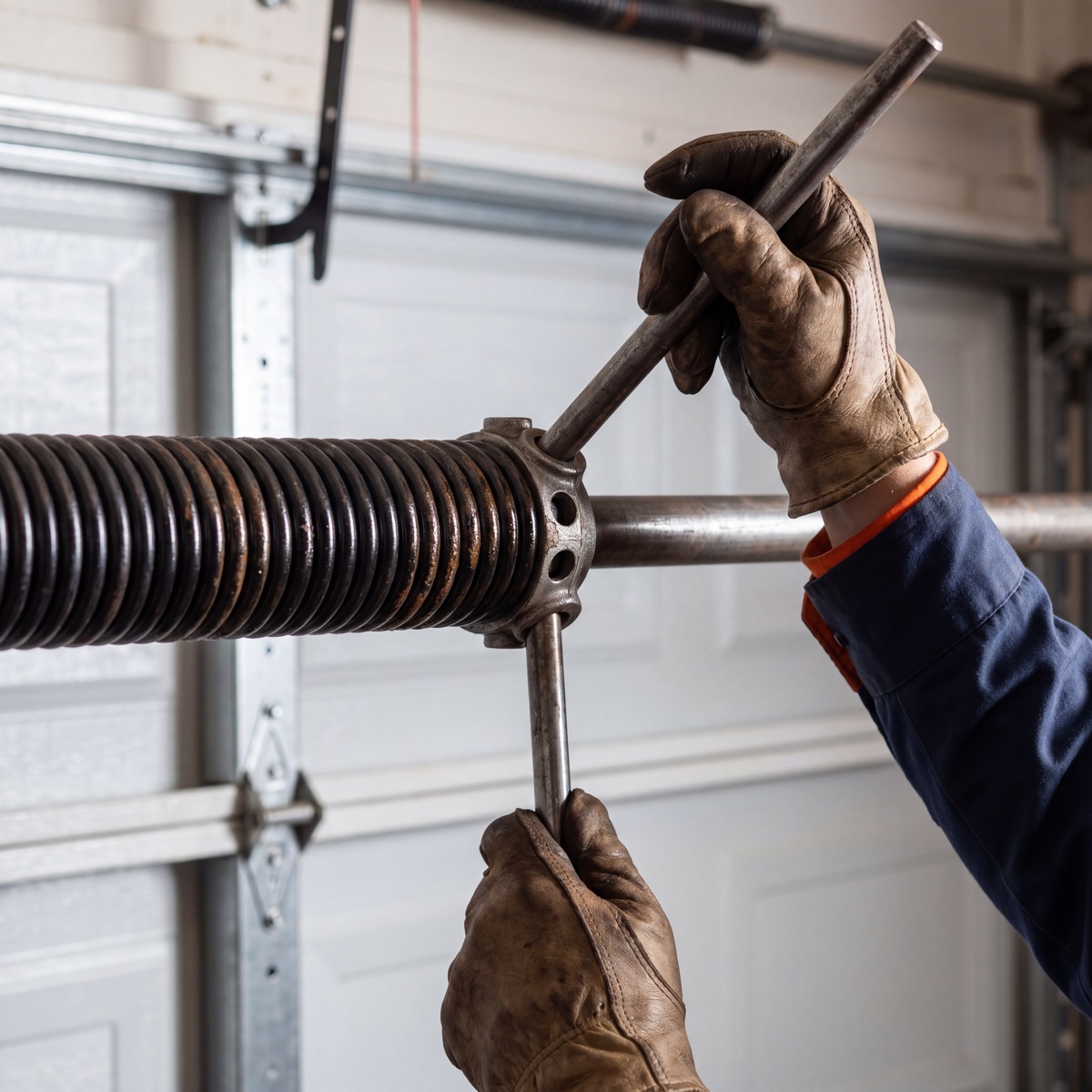
This is the one job you shouldn't DIY.
A wound torsion spring stores enough energy to lift a 150–300 lb door — and releases all of it instantly if handled without proper winding bars. Every year people are seriously injured trying to swap springs with screwdrivers and improvised tools. Our techs do this daily, with the right hardware, and it typically takes under an hour.
How we replace springs
Measure, don't guess
Wire size, inside diameter, and length measured so the new spring matches your door's exact weight — a mismatched spring wears out the opener.
High-cycle hardware
We install springs rated well beyond the builder-grade 10,000 cycles, so you're not repeating this in a few years.
Both springs on two-spring doors
Springs wear together. When one snaps, its twin is close behind — replacing the pair avoids a second call. We'll show you the math either way.
Balance & safety test
The door should hold steady at half-open and reverse on contact. We test both, then lubricate everything before we pack up.
Wondering if your spring is on its way out? Read 5 signs your garage door spring is about to fail — or if the whole door is aging, compare with a new garage door installation.
Spring questions, answered
How long do garage door springs last?+
Standard springs are rated around 10,000 open-close cycles — roughly 7–10 years for a typical family, much less if the garage is your main entrance. High-cycle springs can double or triple that.
Can I open the door manually with a broken spring?+
We don't recommend it. Without the spring, you're lifting the door's full weight, and it can slam down. If a car is trapped and you must get out, use our 24/7 emergency service instead — it's exactly what it's for.
Torsion vs. extension — which do I have?+
Torsion springs sit on a shaft above the door opening; extension springs stretch along the horizontal tracks on each side. Most Katy homes built after the 1990s use torsion. We service both — and can convert extension setups to safer torsion systems.