How Texas Heat & Humidity Wear Out Katy Garage Doors
A garage door in Katy lives a harder life than the same door in Denver. Hundred-degree radiant heat, near-tropical humidity, and a hurricane season that throws debris at it — Gulf-coast weather ages steel, seals, and electronics on fast-forward. Here's what our climate actually does to your door, and the seasonal routine that fights back.
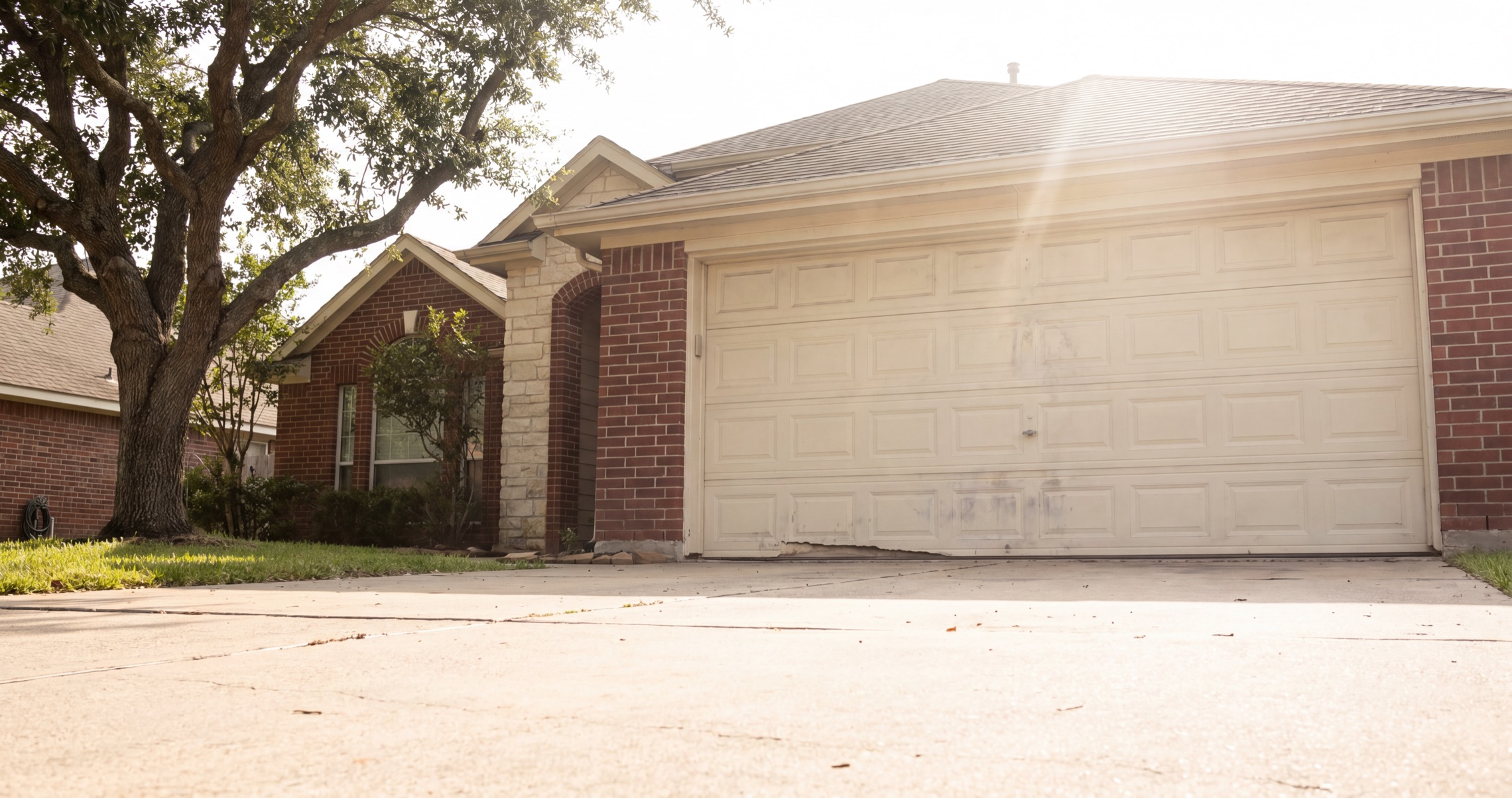
What our climate does to a door
Heat bakes lubricant off rollers and hinges, expands metal tracks just enough to change alignment, and cooks opener logic boards mounted near an uninsulated ceiling. A west-facing door in August can hit surface temperatures well over 140°F.
Humidity is the quiet one: it rusts spring coils and lifting cables from the inside of the strand out, corrodes hinge pins, and swells wooden doors and jambs until they drag. Rust is why springs here often fail before their rated cycle life — pitting concentrates stress on the coil.
Storm season adds pressure swings, wind-driven rain under the bottom seal, and power surges that take out openers. (If a storm just did visible damage, skip the checklist — that's an emergency call.)
The monthly five-minute routine
Spring (March–May): lubricate everything
Before the heat arrives, give rollers, hinges, springs, and the opener rail a light coat of silicone or white-lithium garage door lubricant. Wipe off the excess — drips collect dust and grind like sandpaper. Skip the rubber weather seal (lubricant rots some rubbers) and skip plastic idler wheels.
Summer (June–August): protect the electronics
Check that the opener's vents aren't blanketed in dust, put a surge protector on its outlet (lightning is the #1 killer of logic boards we replace), and re-test the photo-eyes — brackets drift as the structure expands in the heat. If the motor sounds strained, don't wait: a struggling opener is usually compensating for a door problem, and it's cheaper to fix the door than replace the opener.
Fall (September–November): seals and storm prep
Inspect the bottom astragal (the rubber gasket along the floor) and the side/top weather stripping. Cracked or flattened seals let wind-driven rain, mosquitoes, and conditioned air through — replacement is cheap and transforms how the garage feels. If you're in a newer wind-load zone build, confirm the door's bracing hardware is intact before peak storm season.
Winter (December–February): the easy season
Our rare hard freezes stiffen lubricant and shrink metal overnight — if the door groans on a 28° morning, that's usually why. One more light lube pass and a balance check carries you through. It's also the comfortable time of year to finally deal with that dented panel or plan a door upgrade before spring.
What to leave to a tech
Anything touching spring tension, cables, drums, or track geometry. An annual professional tune-up — inspection, precision balance, high-point lubrication, hardware torque — catches the failures this climate accelerates while they're still cheap. Book a tune-up and we'll put your door on a once-a-year rhythm.